

Is community the newest side-hustle?
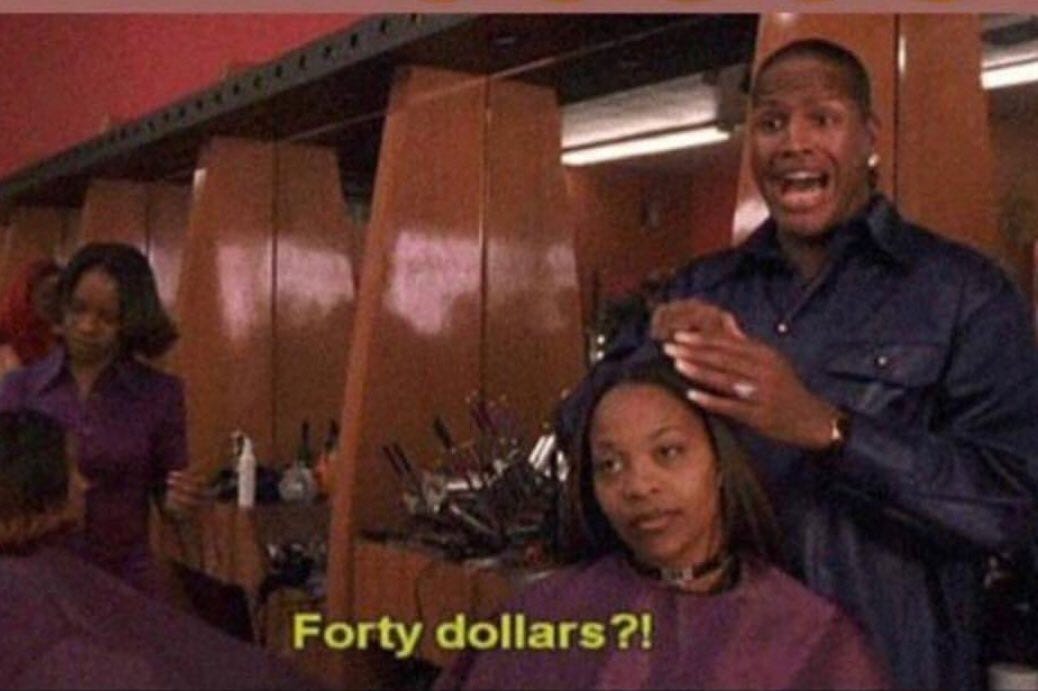
A run club should never be $40

I spent $128 dollars on community events this week.
$2 on a lecture series, $10 for a vinyl listening party, $11 for a game night, $22 for a workshop, $36 on a catch-up lunch with a friend, and $50 for a networking mixer.
That’s… kind of mind-blowing when I look at the numbers laid out like that.
As a recovering homebody, if this season of intentionally trying to make (and maintain) community has taught me anything, it’s this:
It costs a lot of money to keep a consistent calendar.
Sometimes I wonder if I’m getting a return on my investment.
I don’t remember it always being this way. When I first moved to the city, it wasn’t hard to be such a regular at the coffee shop that the barista started prepping my order before I even got to the counter. When I’m back in my hometown, I can easily spot a member of my old church congregation just by the back of their head. When I worked at my local cycling studio, we bought the riders cupcakes for their birthdays and flowers to celebrate their milestones.
That was the beautiful magic of having a third space. It brought people together simply through proximity and created an ecosystem of unlikely connections just by sharing the same space. You honestly didn’t even have to deeply engage to feel like you belonged.
But something shifted.
Social anxiety keeps us too fearful to connect. We’ve lost the art of approaching strangers. Some people even take pride in being unapproachable. While several factors created this perfect storm, it wouldn’t be a long shot to say that a cultural shift towards a more individualistic approach to interaction is one of them.
Enter 4th spaces.
With the decline of organic, proximity-based interaction (3rd spaces), a new type of connection based on shared interests and mindsets started to emerge. Your book club, the photography meetup, and your run club started becoming a more surefire way to find a like-minded community. It felt easier to establish connections when you were near your people. But above all else, it fostered a deep sense of belonging. Belonging that, sometimes, came with an entry fee.
Because we are lonelier than we’ve ever been and yearning for spaces to simply be, we see no harm in spending $10 here, $20 there on an event. But over time, it starts to add up.
Connection isn’t cheap. But it is profitable.
That’s no secret. The hottest commodity right now is loneliness. So much so that it’s created an economic boom in the 4th-space and curated-community business. In 2026, the loneliness economy is estimated to be worth over $500 billion, with “emotional labor as a service” becoming more prevalent.
Brands have taken notice, too.
It’s not uncommon to see a rooftop yoga series curated by a major athletic brand or a listening party brought to you by a music streaming platform. Today, entire holding companies are being built, branded, and betting on your loneliness.
Ebooks, courses, and Discord servers are teaching people how to build and grow communities—not to connect, but to capitalize.
Since community has been corrupted by capitalism, it's now the perfect time to turn connection into a side hustle.
Let me be crystal clear, I’m not saying it’s wrong or immoral to charge for an event or a community experience. It’s the reality of the economy that we live in. Venue costs, F&B, DJs, the small details, that’s not cheap. What might be free to consume was not free to create.
What I am saying is that there is a growing disconnect between organizers’ intentions and community impact, leaving an overarching expectation gap that’s not being filled. When it becomes more about leaning into trends than building trust, about compensation over human connection, and about curating aesthetics rather than facilitating experiences, people have the right to be skeptical.
So, again, it begs the question:
Is there a return on investment in paying for community?
For some, it is.
The idea of community coming at a price offers many benefits. Cost creates curation, and curation brings guarantees. It ensures that everyone in this room actually wants to be here and is in alignment, whether that’s similar interests, a desired vibe, or a shared purpose—there’s no confusion about why we’re here and what we paid to experience. Knowing that the room is filled with like-minded people also takes something challenging—like approaching—and removes the awkward, making it feel more natural even if it is being controlled.
For others, the core idea of community is gone, leaving something hollow in its place.
Community was always a system of survival. It’s what got people through the hardest of times and kept them together in the good times. That system today has been colonized. Gatekept behind a glass made up of high-priced tickets and unjustifiable membership tiers. In order to access that connection, you not only have to pay to play, but also pay to stay.
For me, it’s been a push and pull between what’s real and what’s simply marketed to my loneliness.
I’ve met some of my closest NYC friends in 4th spaces that didn’t cost a dime to get into. I’ve paid $100 for experiences that promised a real connection, and fully delivered on that promise. I’ve been to both paid and free experiences that were subpar, money-grabbing grifter gimmicks disguised as community and “culture”.
Every experience, however, leaves me asking if this is really the future of what it means to find belonging.
If something as natural as connection can really be quantified by dollars and cents.
If the cure for loneliness really is on the other side of a Posh link.
Like what you’re reading? Buy me a coffee 🖤
This publication is free. If you’ve enjoyed my content, feel free to support my work.